
How to Operate Binance Exchange: A Step-by-Step Guide for Beginners

Binance is one of the largest and most popular cryptocurrency exchanges in the world, offering a wide range of digital assets, trading pairs, and advanced financial tools. For new users, understanding how to operate Binance efficiently is essential to navigate the platform safely and make the most of its features. This guide provides a clear breakdown of the core operations, from account setup to executing your first trade.
To begin operating on Binance, the first step is creating an account. Visit the official Binance website and click on "Register." You can sign up using your email address or mobile phone number. It is important to use a strong password and enable two-factor authentication (2FA) immediately after registration. Binance requires identity verification (KYC) for most services, including higher withdrawal limits and fiat currency transactions. You will need to upload a government-issued ID and complete a facial recognition process to verify your account.
Once your account is set up and verified, the next step is depositing funds. Binance supports both cryptocurrency deposits and fiat currency deposits. To deposit crypto, navigate to "Wallet" and select "Deposit." Choose the cryptocurrency you wish to deposit, copy the deposit address, and send funds from an external wallet or another exchange. For fiat deposits, you can use bank transfers, credit cards, or third-party payment services available in your region. Be aware of minimum deposit amounts and any associated fees.
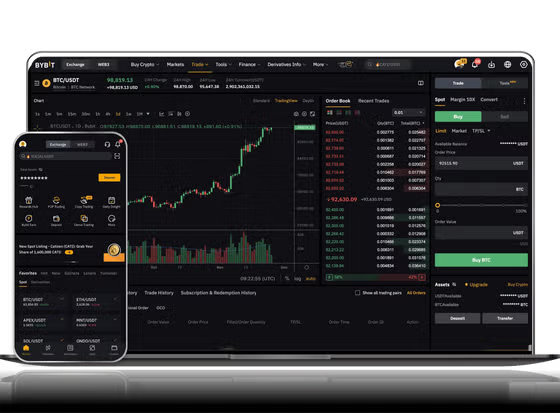
After funding your account, you are ready to explore trading. Binance offers several trading interfaces, including "Classic," "Advanced," and "Margin." For beginners, the "Classic" or "Lite" mode is recommended. In the trading interface, you will see a price chart, order book, and trading pairs. To buy a cryptocurrency, such as Bitcoin (BTC), select the trading pair (e.g., BTC/USDT). Choose between a market order (buys at current market price instantly) or a limit order (buys at a specific price you set). Enter the amount and confirm the trade.
Beyond spot trading, Binance provides additional services such as "Earn," "Staking," and "Futures." The "Earn" section allows you to deposit idle assets into savings or staking products to generate passive income. These products vary in lock-up periods and interest rates. "Futures" trading, however, involves higher risk and leverage, and is best suited for experienced traders. If you are new, avoid using leverage until you fully understand the mechanics.
Security and withdrawal are also critical aspects of operating Binance. Always double-check withdrawal addresses and ensure they match the correct network (e.g., ERC-20 for Ethereum). Binance automatically applies withdrawal limits based on your verification level, but you can whitelist withdrawal addresses for added security. Regularly review your API keys and deactivate any that are not in use.
Finally, staying informed is key. Binance frequently updates its platform, adds new tokens, and adjusts fees. Use the "Announcements" section and official social media channels to keep up with changes. By following these steps—account creation, verification, depositing funds, placing trades, and managing security—you can operate Binance confidently and effectively as part of your cryptocurrency strategy.


发表评论