
How to Operate Binance Futures After Acquiring a Crypto Futures Exchange: A Step-by-Step Guide
Binance, the world’s largest cryptocurrency exchange by trading volume, has historically expanded its market dominance through strategic acquisitions. One of the most significant moves in recent years was its acquisition of a major crypto futures trading platform. This integration fundamentally reshaped how traders access leveraged products on Binance. For users wondering how to operate the Binance futures exchange following such an acquisition, the process blends familiar interface elements with new backend infrastructure.
First, understand that after an acquisition, Binance typically merges the acquired exchange’s liquidity and order books into its own Binance Futures platform. This means that if you previously held an account on the acquired exchange, you will likely need to migrate to a Binance account. The first operational step is to visit the official Binance website and register or log in. You will need to complete identity verification (KYC) to unlock futures trading, as Binance enforces stricter compliance than many smaller exchanges it acquires.
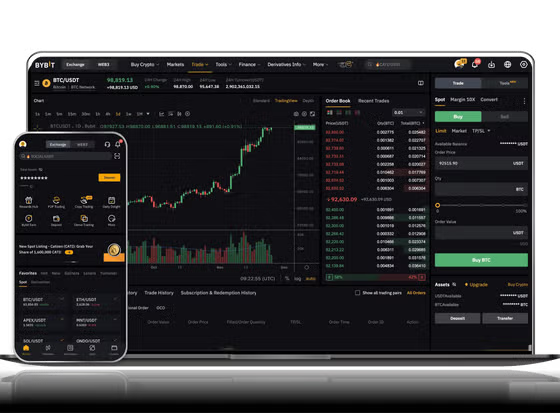
Once your account is verified, navigate to the “Derivatives” or “Futures” section on the Binance interface. Here, you can select between USDⓈ-M (stablecoin-margined) and COIN-M (coin-margined) futures. After the acquisition, the trading terminal will often feature upgraded risk management tools, such as a new isolated margin mode and a more responsive liquidation engine. To begin operating, deposit collateral into your futures wallet. You can transfer assets from your Spot wallet directly.
The actual trading mechanism remains similar to standard futures platforms. You choose a leverage level (from 1x to 125x, depending on the asset), then place a limit or market order. A crucial operational change post-acquisition is the unified cross-collateral system. Binance may allow you to use multiple assets as margin, not just the base trading pair. This flexibility comes from the technology integrated from the acquired exchange. To manage risk effectively, always set a stop-loss order.
Another key operational feature is the “Copy Trading” and “Grid Trading” tools that are often enhanced after an acquisition. Binance absorbs the best technology from its acquired platform and rolls it out globally. For advanced users, the API remains critical. After an acquisition, the API endpoints are usually updated. You must generate a new API key from the Binance security settings, restrict it to futures trading, and avoid using outdated API credentials from the acquired exchange.
Finally, post-acquisition operation includes monitoring fee structures. Binance often harmonizes fees, so you might see lower maker fees but higher taker fees compared to the original platform. Always check the “Futures Fee Structure” page. Withdrawals are also processed through Binance’s core system, which is faster but subject to its internal security delays. By following these steps—account migration, wallet funding, leverage selection, and risk tool usage—you can seamlessly operate the Binance futures exchange regardless of which platform it originally acquired.


发表评论